Archives for category: Music

What can improvisation contribute to artistic research?
RMIT Vietnam Saigon South Campus, Building 1, Level 1, Theatre Bowen
10:00, Sunday 21 September

This presentation by Marcel Cobussen will deal with improvisation and what it can contribute to artistic research. How can artistic research benefit from improvisational strategies? How can artistic research be improvised, and what would that imply in terms of its methodology? Can improvisation, regarded as a process of continuous experimentation and exploration, become a method through which artistic research is executed? Improvising as a research method implies opening up a field of possibilities and trying to keep it open – by allowing risks, misunderstandings, and ambiguity – instead of aiming at a clearly demarcated and pre-established endpoint, solution or answer. Perhaps this is what artistic research should be all about …

To register via Humanitix, please visit: https://events.humanitix.com/what-can-improvisation-contribute-to-artistic-research

Marcel Cobussen is Professor of Auditory Culture and Music Philosophy at Leiden University. He is author of e.g. Engaging With Everyday Sounds (2022), The Field of Musical Improvisation (2017), Thresholds: Rethinking Spirituality through Music (2008), and co-editor of The Routledge Companion to Sounding Art (2016)

What is the relationship between society and music? Everyone will agree that a society’s economic, social, technological, and political situation, as well as its norms and values affect which music can be listened to, and how, where and when music is produced, distributed, and experienced. However, the fact that music depends on technological, economic, and social developments does not mean that it is simply and solely a causal effect of these developments. Music plays an active and dynamic role in the formation of a society. Each society is constituted by and through many different practices, and music is one of them. Through music we get certain experiences – Bach’s Matthew Passion might evoke religious or spiritual feelings. Music gives us access to specific emotions, from sad to pleasant ones. It influences our behavior – think of how deejays can make us dance. It can express and distribute certain ideas – ideas about politics, gender, sexuality, religion, etc. Music can create communities but also destroy them; it demarcates spaces and creates specific atmospheres. The list can easily be expanded.
Taking the idea that music co-creates our society as a point of departure, I will investigate in my presentation what this means for professional music education. What roles can conservatory alumni play in our contemporary, everyday lives? Is it necessary to rethink and perhaps expand those roles? And how can artistic research be helpful here? What new perspectives can be developed so that music will be regarded (again) as crucial to our well-being, as indispensable for a reorientation on our civilization? Yes, this is going to be a lecture that can make a difference!

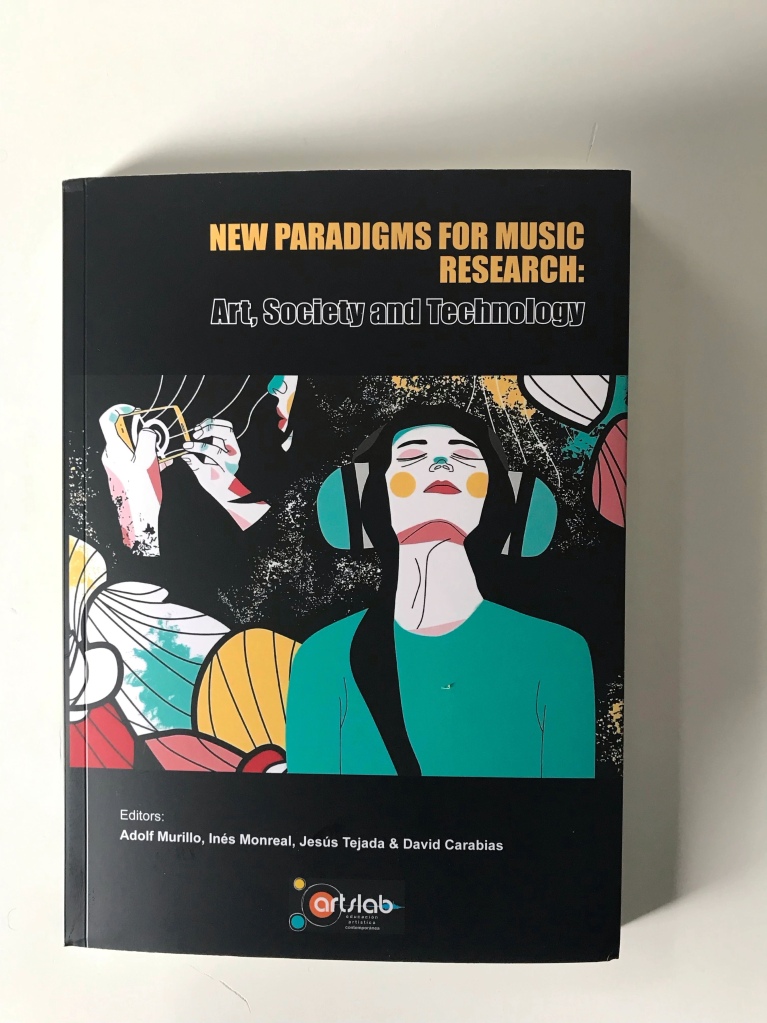
Today, I found this book on my doormat: New Paradigms for Music Research: Art, Society and Technology, edited by Adolf Murillo, Ines Monreal, Jesus Tejada and David Carabias and issued by the University of Valencia (Spain). Contributors are participants to the first International Conference on the Intersection of Art, Society and Technology in Musical Innovation in 2021, organized by the same university.

My contribution consists of a text on soundwalking, mostly concentrating on my development of a soundwalk in Leiden, the Netherlands in 2021. My claim is that this art form takes in fact place between art and non-art and as such has both artistic and societal significance.

On 27 and 28 February 2023, the first Sound Arguments session will take place in Studio Loos in The Hague. Sound Arguments is an initiative of Jonathan Impett, Magno Caliman (both working at the Orpheus Institute in Ghent) and myself.

Sound Arguments will bring together sound artists, sound studies scholars, organizers, PhD students working on/in/through sound, etc. Next to lectures and presenting own work, there’s room for workshops.

Our first guest will be the marvelous Argentinian composer-musician Cecilia Arditto; she will give a lecture on notation, perform her cycle Musique concrete and organize a workshop on composing with everyday (sounding) objects. See also here.

For more information on Sound Arguments, please click here

On December 6, 2021 I hosted a special event in Studio Loos in The Hague (the Netherlands) on Sonic Materialism. Featuring the American trombone player, theoretician, and instrument builder Kevin Fairbairn, the Welsh composer and improviser Richard Barrett, and the Argentinian sound artist and composer Gabriel Paiuk, the event was comprised of 3 lecture-performances (and a brief introduction by me), exploring how Sonic Materialism can sound, how sound as sound can contribute to a more theoretical discourse on (New) Materialism.

A registration of this event can be found here

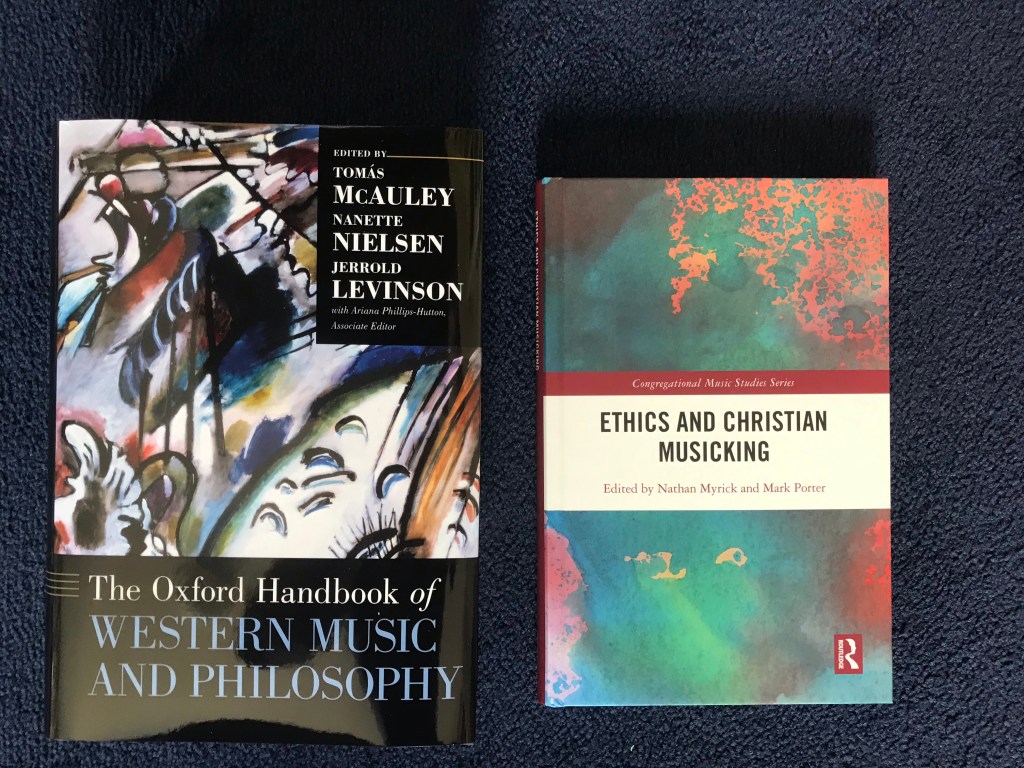
Today two new books arrived, both containing an essay of mine. The Oxford Handbook of Western Music and Philosophy includes my reflections on (everyday) listening; my contribution to Ethics and Christian Musicking is called “The Silence of the Monks” and takes as its point of departure the friary of the Carthusian order in a French monastery. The monks are not allowed to speak but of course always surrounded by (and themselves producing) sound.

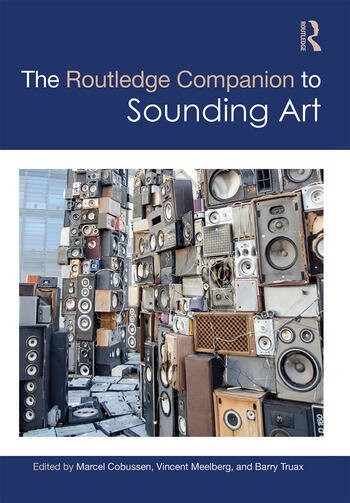
Good news! The Routledge Companion to Sounding Art, edited by Barry Truax, Vincent Meelberg and myself is now also available in a paperback version.

The Routledge Companion to Sounding Art  book cover

Just to let you know that my online PhD dissertation from 2002 – Deconstruction in Music – is completely renewed. See here!

2015-06-12 18.15.02

This text is a slightly reworked version of a keynote speech I gave in Aveiro (Portugal) during the PERFORMA 2015 Conference on Musical Performance, organized by the University of Aveiro, the Institute of Ethnomusicology (INET-MD), and the Brazilian Association of Musical Performance (ABRAPEM).

kolarac

I was asked to contribute an essay to the 50th issue of the Serbian journal New Sound. And also because my wife is Serbian I decided to write a sonic postcard from Belgrade in which (Serbian) sounds, sound art, and musics converge. See: http://www.newsound.org.rs/pdf/en/ns50/21.M.Cobussen.pdf