What can improvisation contribute to artistic research?
RMIT Vietnam Saigon South Campus, Building 1, Level 1, Theatre Bowen
10:00, Sunday 21 September

This presentation by Marcel Cobussen will deal with improvisation and what it can contribute to artistic research. How can artistic research benefit from improvisational strategies? How can artistic research be improvised, and what would that imply in terms of its methodology? Can improvisation, regarded as a process of continuous experimentation and exploration, become a method through which artistic research is executed? Improvising as a research method implies opening up a field of possibilities and trying to keep it open – by allowing risks, misunderstandings, and ambiguity – instead of aiming at a clearly demarcated and pre-established endpoint, solution or answer. Perhaps this is what artistic research should be all about …

To register via Humanitix, please visit: https://events.humanitix.com/what-can-improvisation-contribute-to-artistic-research

Marcel Cobussen is Professor of Auditory Culture and Music Philosophy at Leiden University. He is author of e.g. Engaging With Everyday Sounds (2022), The Field of Musical Improvisation (2017), Thresholds: Rethinking Spirituality through Music (2008), and co-editor of The Routledge Companion to Sounding Art (2016)

Recently published in The Journal of Sonic Studiesmy review of Usue Ruiz Arana’s very inspiring book Urban Soundscapes. A Guide to Listening for Landscape Architecture and Urban Design.

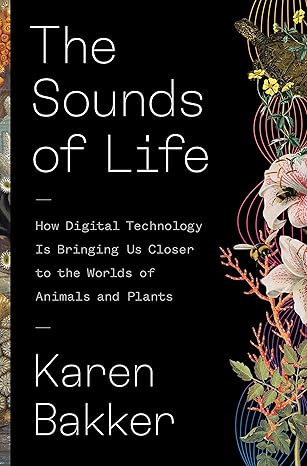
Recently published in The Journal of Sonic Studies: my review of Karen Bakker’s wonderful book The Sounds of Life.

Just published yesterday (12-02-2025) – me with a whole lot of other authors. All this thanks to Francesco Aletta: “Exploring the relationships between soundscape quality and public health using a systems thinking approach.

A Sound approach to Noise and Health (book-cover)

Just published and open access: a rich overview of the current discourse on sound, health, and well-being. My own contribution deals with the role sound art can play in creating a more liveable environment. An important opportunity for improvement can be found in sound’s supportive role in establishing more attentive interactions between human (and non-human) beings and their (sonic) environment. Here’s a link to the book.

Mid November 2023 I had the pleasure of being invited for a keynote presentation at the kick-off of the Applied and Experimental Sound Research Lab (AESR) in Vienna (Austria). In this presentation I combine insights from my book Engaging With Everyday Sounds with my advisory work for (non)governmental organizations on the sound design of public spaces, and some ideas about the extended role artistic research might play in contemporary society.

Reworked text of a presentation I gave in Torino during Forum Acusticum 2023: “The Role of Sound Art in Soundscape Design.

Yesterday, September 17 2023, finally, the official launch of my soundwalk “Leiden (Un)Heard,” developed together with Sharon Stewart, Michiel Huijsman, and Caeso. “Leiden (Un)Heard” contains underwater sounds, sounds of electromagnetic fields, sounds as heard by mice, sounds from the past, sounds from underground, and many more.

More info can be found here: https://soundtrackcity.nl/leiden-unheard/ (in English) or https://soundtrackcity.nl/ongehoord-leiden/ (in Dutch)

What is the relationship between society and music? Everyone will agree that a society’s economic, social, technological, and political situation, as well as its norms and values affect which music can be listened to, and how, where and when music is produced, distributed, and experienced. However, the fact that music depends on technological, economic, and social developments does not mean that it is simply and solely a causal effect of these developments. Music plays an active and dynamic role in the formation of a society. Each society is constituted by and through many different practices, and music is one of them. Through music we get certain experiences – Bach’s Matthew Passion might evoke religious or spiritual feelings. Music gives us access to specific emotions, from sad to pleasant ones. It influences our behavior – think of how deejays can make us dance. It can express and distribute certain ideas – ideas about politics, gender, sexuality, religion, etc. Music can create communities but also destroy them; it demarcates spaces and creates specific atmospheres. The list can easily be expanded.
Taking the idea that music co-creates our society as a point of departure, I will investigate in my presentation what this means for professional music education. What roles can conservatory alumni play in our contemporary, everyday lives? Is it necessary to rethink and perhaps expand those roles? And how can artistic research be helpful here? What new perspectives can be developed so that music will be regarded (again) as crucial to our well-being, as indispensable for a reorientation on our civilization? Yes, this is going to be a lecture that can make a difference!

After reports on the Hofplein square, the new ecological city park Hofbogen, and the Rijnhaven area, find here the fourth report I have composed for the City of Rotterdam. It consists of several recommendations to protect and/or improve the sonic quality of this part of the city. Besides the already beautiful sonic atmosphere of the Brienenoord Parc, the report concentrates on sonic ecologies in and around the future residential area of Feijenoord City.

The report (in Dutch) – which also contains audio files – can be found here