

Entrance to the John Cage archives.
Entrance to the John Cage archives.
In my work on musical improvisation I emphasize and concentrate on all kinds of interaction: interaction between a musician and her instrument, between instrument and technology and/or the space (acoustics), between a musician and her musical/cultural/social background, and of course visual and aural interactions among musicians on stage. Concerning the latter, thorough research is being done at the Max Planck Institute. Read more here about the research group Music Cognition and Action.
Mihailo Antovic, a linguist and visiting researcher at Case Western Reserve University, proposes that our musical conceptualization brings together a world of different people.
He found the commonality among children of distinct ethnic backgrounds and languages in his home of Serbia, and he’s now testing whether the same can be found among English-speaking, Serbian-speaking and seeing-impaired children in the U.S.
See article.
… Yeah, I’ve reached a certain age … This is now appropriate music …
On February 13, 2012, the Dutch daily NRC published an article about musical tear-jerkers and a scientific explanation of this phenomenon. Such as a result of the Grammy Awards success of singers like Adele.
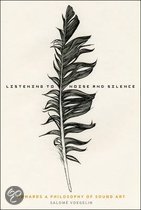
Listening to Noise and Silence by Salome Voegelin. Great book. Perfect mix between philosophical reflections, descriptions of sound art works and personal observations.
 Marcel likes Everyday Music Listening by Ruth Herbert. See also my review of this book in the second issue of The Journal of Sonic Studies.
 Thinking Sounds