
Recently published in The Journal of Sonic Studies: my review of Karen Bakker’s wonderful book The Sounds of Life.
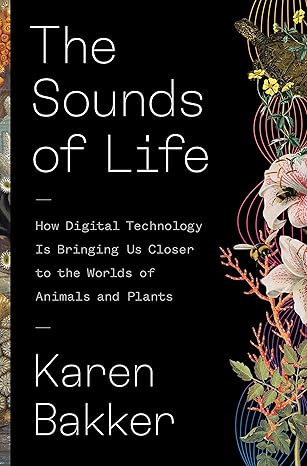
Recently published in The Journal of Sonic Studies: my review of Karen Bakker’s wonderful book The Sounds of Life.
Yesterday, September 17 2023, finally, the official launch of my soundwalk “Leiden (Un)Heard,” developed together with Sharon Stewart, Michiel Huijsman, and Caeso. “Leiden (Un)Heard” contains underwater sounds, sounds of electromagnetic fields, sounds as heard by mice, sounds from the past, sounds from underground, and many more.
More info can be found here: https://soundtrackcity.nl/leiden-unheard/ (in English) or https://soundtrackcity.nl/ongehoord-leiden/ (in Dutch)


After reports on the Hofplein square, the new ecological city park Hofbogen, and the Rijnhaven area, find here the fourth report I have composed for the City of Rotterdam. It consists of several recommendations to protect and/or improve the sonic quality of this part of the city. Besides the already beautiful sonic atmosphere of the Brienenoord Parc, the report concentrates on sonic ecologies in and around the future residential area of Feijenoord City.
The report (in Dutch) – which also contains audio files – can be found here

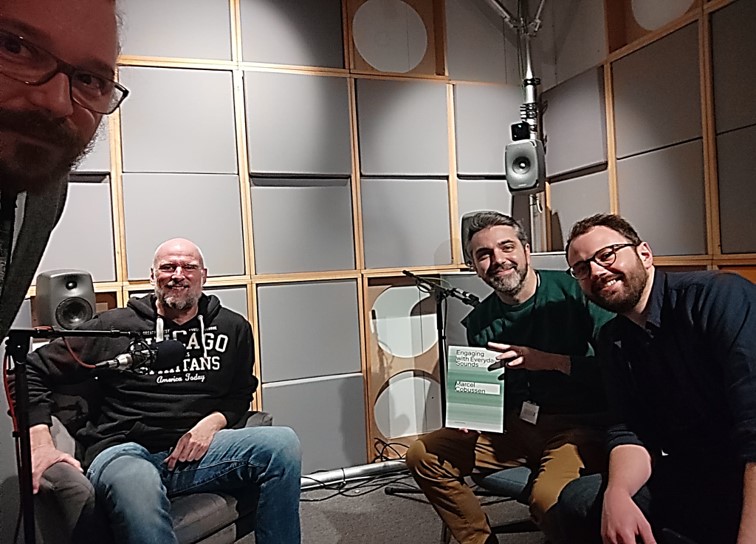
Last week I’ve recorded a podcast together with Francesco Aletta, Tin Oberman and Andrew Mitchell in London based on my latest book Engaging With Everyday Sounds. Will be broadcast soon.
See the ad for this position (0.2 fte) at Leiden U here. You should apply before March 1!!!!
On 27 and 28 February 2023, the first Sound Arguments session will take place in Studio Loos in The Hague. Sound Arguments is an initiative of Jonathan Impett, Magno Caliman (both working at the Orpheus Institute in Ghent) and myself.
Sound Arguments will bring together sound artists, sound studies scholars, organizers, PhD students working on/in/through sound, etc. Next to lectures and presenting own work, there’s room for workshops.
Our first guest will be the marvelous Argentinian composer-musician Cecilia Arditto; she will give a lecture on notation, perform her cycle Musique concrete and organize a workshop on composing with everyday (sounding) objects. See also here.
For more information on Sound Arguments, please click here
Aviation noise, especially in a densely populated country like The Netherlands, has become a serious problem for many citizens over the past 5 decades or so. On 21 February 2021, the National Institute for Public Health and the Environment has published a new report in which it says that more and more people are suffering from aviation noise, even though there’s no significant increase of the amount of dBs. The Institute concludes that their current research methodology might fall short as they cannot take into account “non-acoustic factors.” Well, besides those important non-acoustic factors, other acoustic factors besides dBs can also be relevant to take into account. See my reactions on the report in the Dutch daily Algemeen Dagblad and the news site of RTL Nieuws.

As you may know, since a couple of years I’m asked by the City of Rotterdam to investigate how its citizens experience the sonic quality of Rotterdam and to suggest some recommendations as how to improve the sonic public environment. After reports on the Hofplein square and the new ecological city park Hofbogen, this new report is on the Rijnhaven area where several residential towers will arise, next to a city park with a beach area and catering facilities.
The report can be found here

On December 6, 2021 I hosted a special event in Studio Loos in The Hague (the Netherlands) on Sonic Materialism. Featuring the American trombone player, theoretician, and instrument builder Kevin Fairbairn, the Welsh composer and improviser Richard Barrett, and the Argentinian sound artist and composer Gabriel Paiuk, the event was comprised of 3 lecture-performances (and a brief introduction by me), exploring how Sonic Materialism can sound, how sound as sound can contribute to a more theoretical discourse on (New) Materialism.
A registration of this event can be found here
 Thinking Sounds