Archives for category: Sound Art

On 27 and 28 February 2023, the first Sound Arguments session will take place in Studio Loos in The Hague. Sound Arguments is an initiative of Jonathan Impett, Magno Caliman (both working at the Orpheus Institute in Ghent) and myself.

Sound Arguments will bring together sound artists, sound studies scholars, organizers, PhD students working on/in/through sound, etc. Next to lectures and presenting own work, there’s room for workshops.

Our first guest will be the marvelous Argentinian composer-musician Cecilia Arditto; she will give a lecture on notation, perform her cycle Musique concrete and organize a workshop on composing with everyday (sounding) objects. See also here.

For more information on Sound Arguments, please click here
As you may know, since a couple of years I’m asked by the City of Rotterdam to investigate how its citizens experience the sonic quality of Rotterdam and to suggest some recommendations as how to improve the sonic public environment. After reports on the Hofplein square and the new ecological city park Hofbogen, this new report is on the Rijnhaven area where several residential towers will arise, next to a city park with a beach area and catering facilities.

The report can be found here

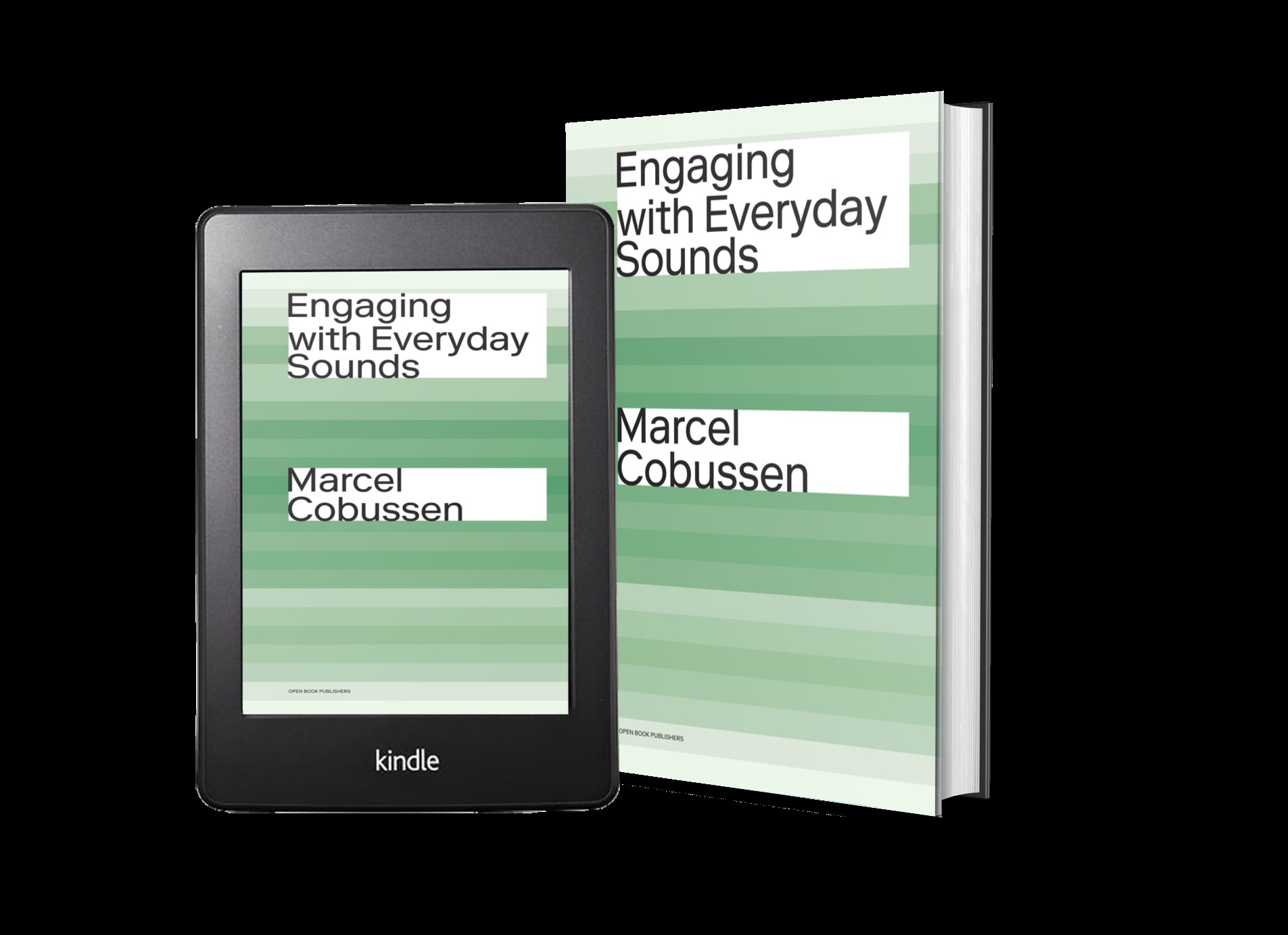
I’m happy to announce that my new (e-)book “Engaging with Everyday Sounds” is now freely available. Please go to https://www.openbookpublishers.com/books/10.11647/obp.0288 to download the book in various formats.

‘Engaging With Everyday Sounds’ explores the role of sounds in everyday life, including their impact on human actions, emotions, and imagination. I intertwine sonic studies with philosophy, sound art, sociology and more to create an innovative guide to sonic materialism, calling for a re-sensitization to our acoustic environment and arguing that everyday sounds have (micro)political, social, and ethical impact to which we should attend.

Exploring the intellectual history of sound studies as well as local, global, and temporal sonic geographies, I weave audio files, images, and journal excerpts into this work to create a multimodal monograph that explores the relationships of humans, nonhumans, and their environments through sound. The book contains an interdisciplinary collection of short essays, which might be valuable reading for both academics and the general reader interested in sound studies, sound art, philosophy, or the sociology of everyday life—and for anyone keen to think about the sonic in new and engaging ways.

On December 6, 2021 I hosted a special event in Studio Loos in The Hague (the Netherlands) on Sonic Materialism. Featuring the American trombone player, theoretician, and instrument builder Kevin Fairbairn, the Welsh composer and improviser Richard Barrett, and the Argentinian sound artist and composer Gabriel Paiuk, the event was comprised of 3 lecture-performances (and a brief introduction by me), exploring how Sonic Materialism can sound, how sound as sound can contribute to a more theoretical discourse on (New) Materialism.

A registration of this event can be found here

In April 2021 Michiel Huijsman (Soundtrackcity) and I published a report containing several recommendations on how to improve the sonic design of a rather busy roundabout in the city center of Rotterdam (The Netherlands). Idea behind the report is that Rotterdam wants to go greener, more sustainable, attract more biodiversity, etc. The report is based on sound walks with many residents and policy makers, a workshop sound, surveys (filled in by over 800 persons), field recordings, and the input of sound artists; it contains text (of course) but also several audio files and a solid introduction about the role of sound in public urban spaces. Caveat: the report is in Dutch but we’re working on an English translation. The report can be accessed here.

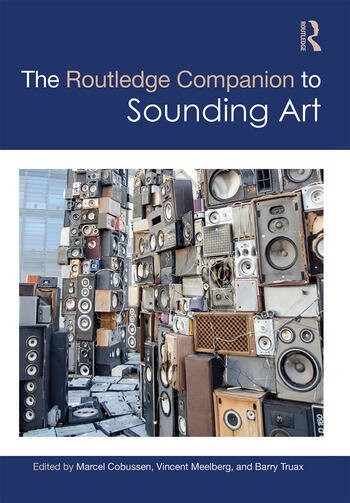
Good news! The Routledge Companion to Sounding Art, edited by Barry Truax, Vincent Meelberg and myself is now also available in a paperback version.

The Routledge Companion to Sounding Art  book cover

Recently published: Musik, die Wissen schafft. Perspektiven kunstlerischer Musikforschung, edited by Arnold Jacobshagen. The book contains many interesting essays, from Darla Crispin, John Rink, Deniz Peters, and Barthold Kuijken, among others. Also a text by me, entitled “Kunstlerische Forschung und Klangkunst im offentlichen Stadtraum” about sound artworks in public urban spaces by Max Neuhaus, Peter Cusack, Edwin van der Heide, and Asa Stjerna in relation to micropolitics and sonic materialism.

Musik, die Wissen schafft. Perspektiven künstlerischer Musikforschung. Musik – Kultur – Geschichte, Bd. 11

Today, Saturday 22 February, a nice interview with me about sounds in and of the city. With attention to my collaborative projects in Leiden – the sound installation Fluisterende Wind and the report on the improvement of the sonic quality at the Garenmarkt – as well as to Jian Kang’s project in Sheffield and Brigitte Schulte-Fortkamp’s work in Berlin.

The interview can be found here, in the Dutch daily Trouw (therefore the text is also in Dutch).

Since today online: a brief interview with me on the use of noise-cancelling headphones at work due to an overload of sounds/noise. I’ve tried to add some alternative thinking to this issue, making a case of sound artists to improve the sonic ambience of workspaces.

Image result for geluidsoverlast op de werkvloer

(The text of the interview is in Dutch)

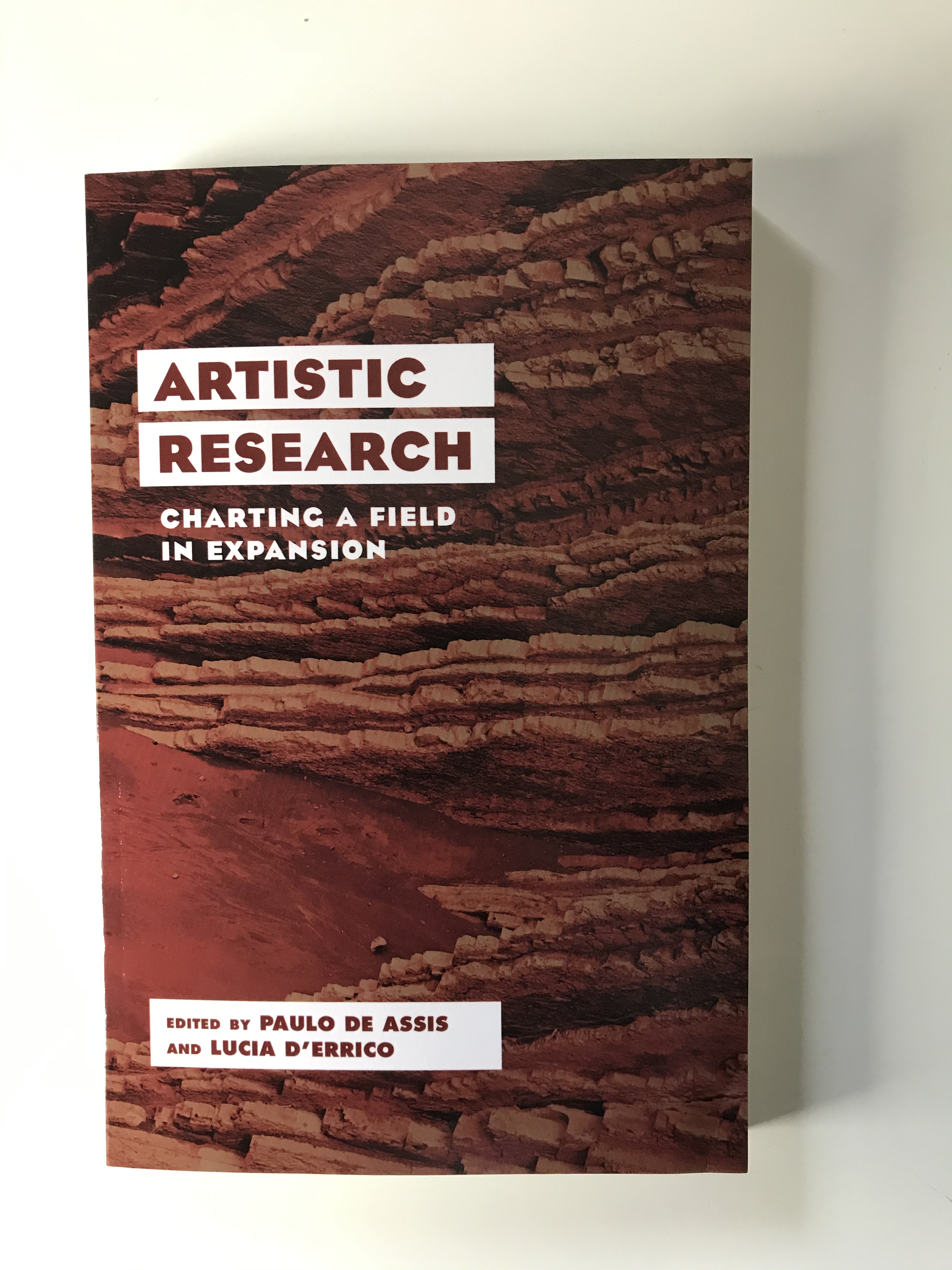
This book fell this morning on my door mat.  It contains great essays by Michael Schwab, Jonathan Impett, Juan Parra, Mieko Kanno and many others … and one by me too: “Artistic Research and Sound Art in Public Urban Spaces.”

2020-01-28 10.55.09

From the article: “It is the aim of this chapter to expand and examine in more detail how artistic research and sound art relate to one another. To do so, I will concentrate on several existing sound art works, all situated in public urban spaces. The main reason for this demarcation is that working on and with public urban spaces often requires more “research” from the sound artist than producing a so-called autonomous, non-site-specific art work. I will try to answer questions such as: How do sound artists contribute towards developments in the arts as well as knowledge production? Which spaces of research and which methodological tools do they use? Which new concepts have they developed? It is my hope that this chapter will show that artistic research and sound studies—both still marginal (and marginalised) in current academic fields—contribute in significant and unique ways towards rethinking our being-in-and-with-the-world.”

In what follows I pay attention to Max Neuhaus, Peter Cusack, Edwin van der Heide, and Asa Stjerna, and connect their work to micropolitics and sonic materialism.