Archives for category: artistic research

What can improvisation contribute to artistic research?
RMIT Vietnam Saigon South Campus, Building 1, Level 1, Theatre Bowen
10:00, Sunday 21 September

This presentation by Marcel Cobussen will deal with improvisation and what it can contribute to artistic research. How can artistic research benefit from improvisational strategies? How can artistic research be improvised, and what would that imply in terms of its methodology? Can improvisation, regarded as a process of continuous experimentation and exploration, become a method through which artistic research is executed? Improvising as a research method implies opening up a field of possibilities and trying to keep it open – by allowing risks, misunderstandings, and ambiguity – instead of aiming at a clearly demarcated and pre-established endpoint, solution or answer. Perhaps this is what artistic research should be all about …

To register via Humanitix, please visit: https://events.humanitix.com/what-can-improvisation-contribute-to-artistic-research

Marcel Cobussen is Professor of Auditory Culture and Music Philosophy at Leiden University. He is author of e.g. Engaging With Everyday Sounds (2022), The Field of Musical Improvisation (2017), Thresholds: Rethinking Spirituality through Music (2008), and co-editor of The Routledge Companion to Sounding Art (2016)

Mid November 2023 I had the pleasure of being invited for a keynote presentation at the kick-off of the Applied and Experimental Sound Research Lab (AESR) in Vienna (Austria). In this presentation I combine insights from my book Engaging With Everyday Sounds with my advisory work for (non)governmental organizations on the sound design of public spaces, and some ideas about the extended role artistic research might play in contemporary society.

What is the relationship between society and music? Everyone will agree that a society’s economic, social, technological, and political situation, as well as its norms and values affect which music can be listened to, and how, where and when music is produced, distributed, and experienced. However, the fact that music depends on technological, economic, and social developments does not mean that it is simply and solely a causal effect of these developments. Music plays an active and dynamic role in the formation of a society. Each society is constituted by and through many different practices, and music is one of them. Through music we get certain experiences – Bach’s Matthew Passion might evoke religious or spiritual feelings. Music gives us access to specific emotions, from sad to pleasant ones. It influences our behavior – think of how deejays can make us dance. It can express and distribute certain ideas – ideas about politics, gender, sexuality, religion, etc. Music can create communities but also destroy them; it demarcates spaces and creates specific atmospheres. The list can easily be expanded.
Taking the idea that music co-creates our society as a point of departure, I will investigate in my presentation what this means for professional music education. What roles can conservatory alumni play in our contemporary, everyday lives? Is it necessary to rethink and perhaps expand those roles? And how can artistic research be helpful here? What new perspectives can be developed so that music will be regarded (again) as crucial to our well-being, as indispensable for a reorientation on our civilization? Yes, this is going to be a lecture that can make a difference!

See the ad for this position (0.2 fte) at Leiden U here. You should apply before March 1!!!!

On December 6, 2021 I hosted a special event in Studio Loos in The Hague (the Netherlands) on Sonic Materialism. Featuring the American trombone player, theoretician, and instrument builder Kevin Fairbairn, the Welsh composer and improviser Richard Barrett, and the Argentinian sound artist and composer Gabriel Paiuk, the event was comprised of 3 lecture-performances (and a brief introduction by me), exploring how Sonic Materialism can sound, how sound as sound can contribute to a more theoretical discourse on (New) Materialism.

A registration of this event can be found here

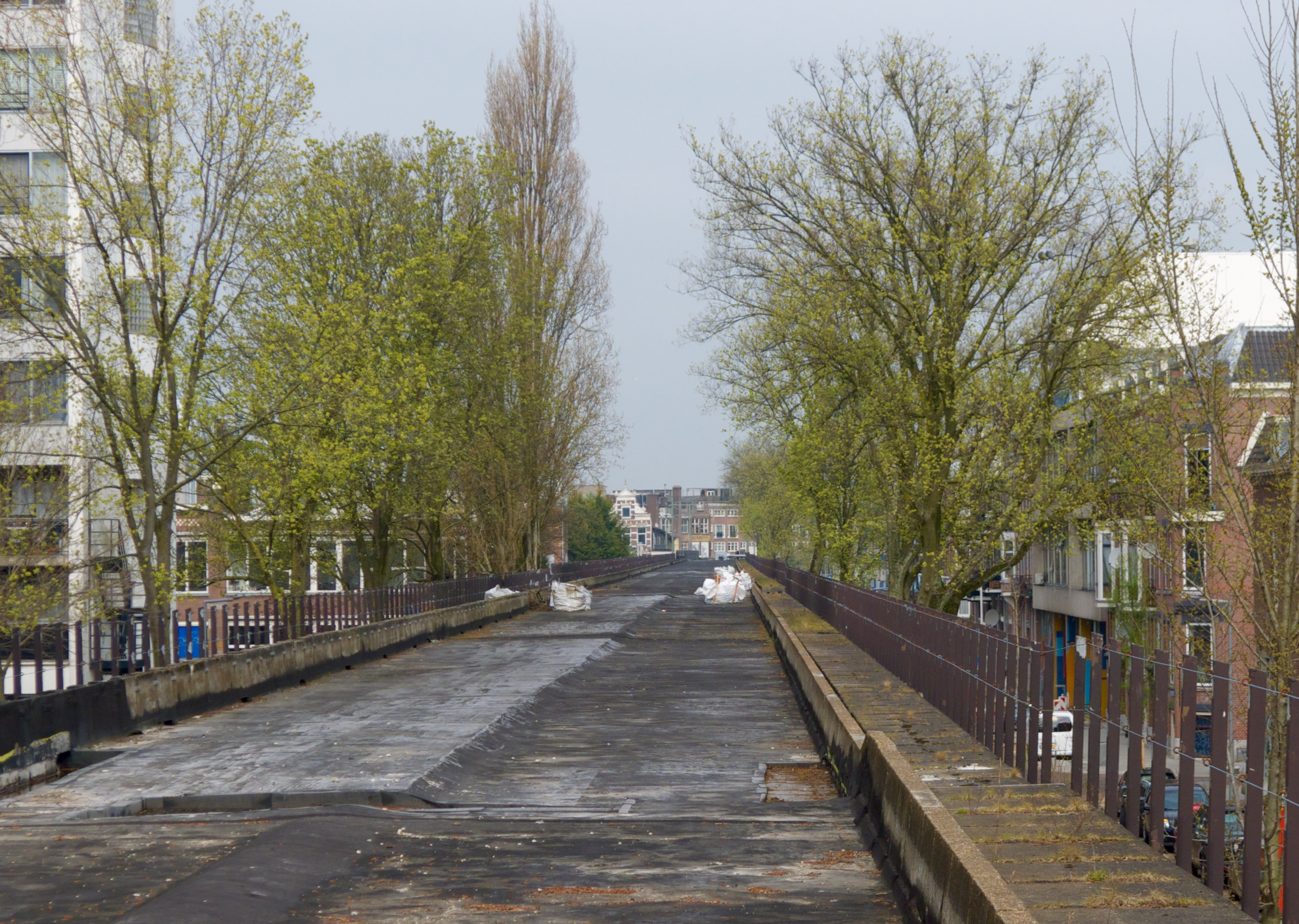
Quite recently the city council of Rotterdam has selected 7 public sites that should be transformed in the near future into spaces where people can relax and escape the urban hectic. One of these sites is a former train line, 6 meters above the ground, running from the city center to the northern suburbs. Central idea is that this former train line should become an ecologically justified park. In order to also make it sonically pleasant, the project management asked Michiel Huijsman (Soundtrackcity) and me to come up with some recommendations. The report, which contains also several audio files, can be found here (at the moment only in Dutch).

Recently published: Musik, die Wissen schafft. Perspektiven kunstlerischer Musikforschung, edited by Arnold Jacobshagen. The book contains many interesting essays, from Darla Crispin, John Rink, Deniz Peters, and Barthold Kuijken, among others. Also a text by me, entitled “Kunstlerische Forschung und Klangkunst im offentlichen Stadtraum” about sound artworks in public urban spaces by Max Neuhaus, Peter Cusack, Edwin van der Heide, and Asa Stjerna in relation to micropolitics and sonic materialism.

Musik, die Wissen schafft. Perspektiven künstlerischer Musikforschung. Musik – Kultur – Geschichte, Bd. 11

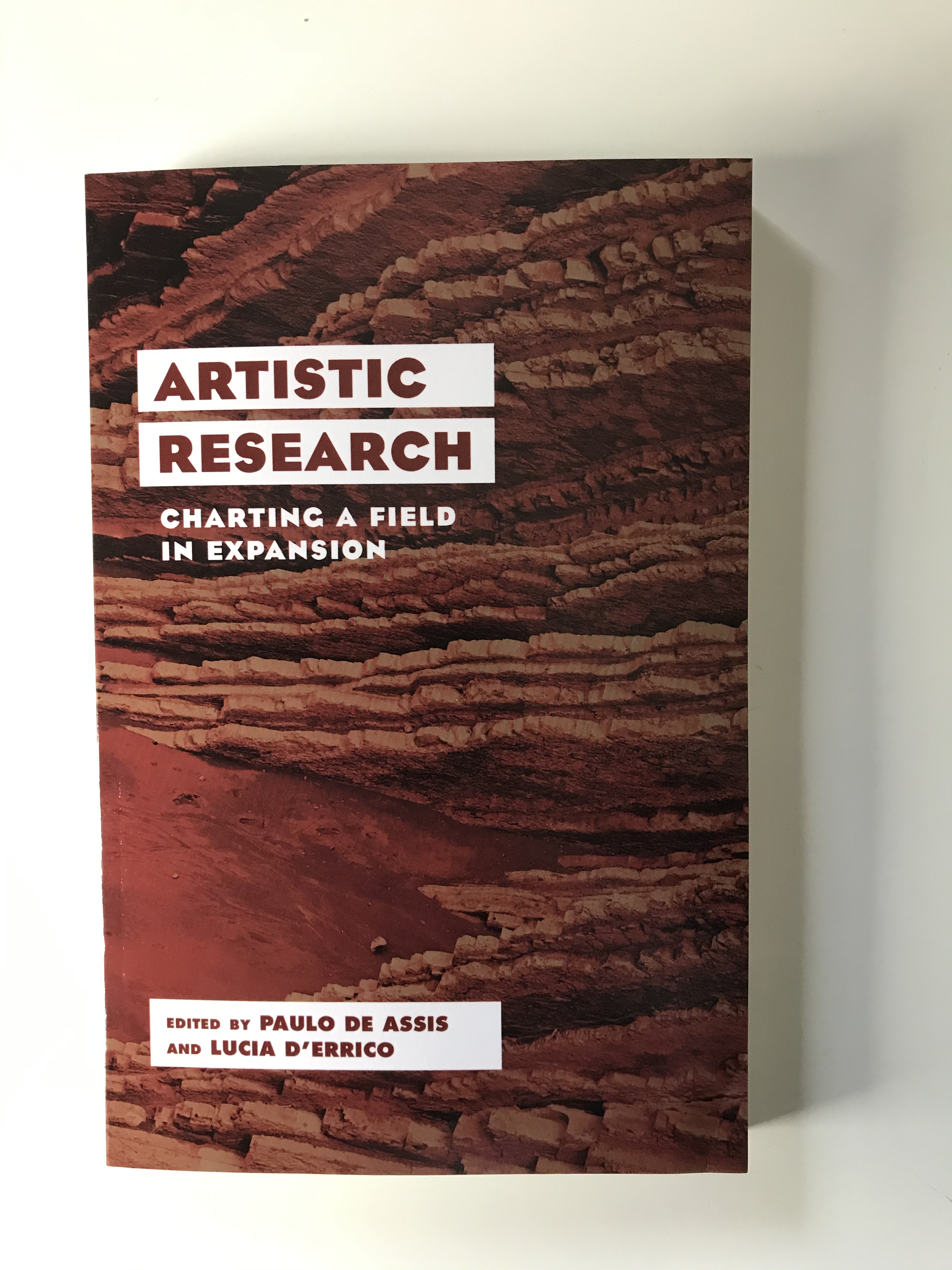
This book fell this morning on my door mat.  It contains great essays by Michael Schwab, Jonathan Impett, Juan Parra, Mieko Kanno and many others … and one by me too: “Artistic Research and Sound Art in Public Urban Spaces.”

2020-01-28 10.55.09

From the article: “It is the aim of this chapter to expand and examine in more detail how artistic research and sound art relate to one another. To do so, I will concentrate on several existing sound art works, all situated in public urban spaces. The main reason for this demarcation is that working on and with public urban spaces often requires more “research” from the sound artist than producing a so-called autonomous, non-site-specific art work. I will try to answer questions such as: How do sound artists contribute towards developments in the arts as well as knowledge production? Which spaces of research and which methodological tools do they use? Which new concepts have they developed? It is my hope that this chapter will show that artistic research and sound studies—both still marginal (and marginalised) in current academic fields—contribute in significant and unique ways towards rethinking our being-in-and-with-the-world.”

In what follows I pay attention to Max Neuhaus, Peter Cusack, Edwin van der Heide, and Asa Stjerna, and connect their work to micropolitics and sonic materialism.


2015-06-12 18.15.02

This text is a slightly reworked version of a keynote speech I gave in Aveiro (Portugal) during the PERFORMA 2015 Conference on Musical Performance, organized by the University of Aveiro, the Institute of Ethnomusicology (INET-MD), and the Brazilian Association of Musical Performance (ABRAPEM).