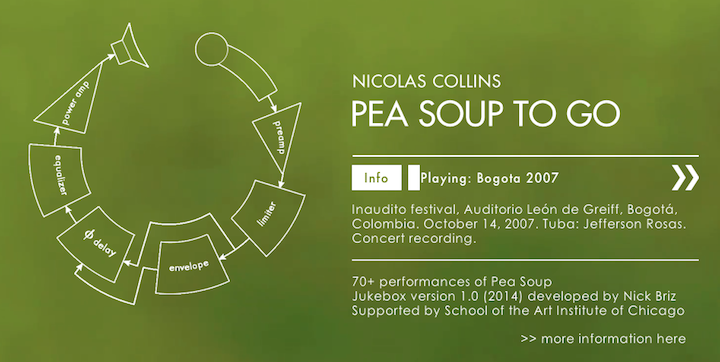
Composer Nic Collins just released his Pea Soup To Go, an open access version of his venerable feedback composition, Pea Soup. Pea Soup To Go is a free streaming audio web application that generates an ever-changing domestic sound art installation on any computer.
Premiered in 1974, Pea Soup creates a self-stabilizing feedback network of microphones and speakers that tunes itself to the architectural acoustics of the space and responds to events—instrumental performances, ambient sounds, human movement, even air currents—with swooping flights of sound. Pea Soup To Go mines decades of performances, including contributions by numerous guest musicians, from around the globe to produce a similarly dreamy soundscape that slowly shifts from key to key as the app shuffles and cross-fades from one recorded space to another.
Pea Soup To Go is being launched on October 24, 2014 — the 40th anniversary of the first performance of Pea Soup.
Point your browser to http://www.nicolascollins.com/peasouptogo/. Auto-shuffle plays endless variations unattended, or click the arrows to jump to the next track. Click “Info” for performance details.
“Sound Studies: Mapping the Field” will be the title of the second international ESSA conference. It will take place at the University of Copenhagen, June 27-29, 2014. Among the themes are: Case studies that testify to the recent changes within sound studies, theoretical reflections on sound studies’ futures, methodological papers testing the inter- or trans-disciplinary approaches of sound studies, historical papers that may help understand and contextualize the current developments, papers addressing how the sound industries take part in the recent developments, sound design futures, and presentations of contemporary artworks that incorporate sounds.
Proposals for panels: February 1
Individual papers: March 15
Keynote speakers are Georgina Born (Oxford University, UK), Norie Neumark (La Trobe University, Australia), Carolyn Birdsall (Amsterdam University, Holland)
Sounding and hearing are not simple entities to be researched on. The specific corporeal as well as situative character and the historically and culturally relative nature of the sonic demand further developments of existing methods: how can we manage to integrate this rich corpus of everyday and in situ sounds into research? How can we avoid simply objectifying and reifying such processual and situative entities? What heuristics and methods are already in use and prove to result in insightful and inspiring research publications? Are there forgotten or overseen references in the history of epistemologies which we could take up and elaborate for sound studies? Are there research institutes or environments which are maybe overseen by current research and need to be reviewed? How can sound practices – be it in traditional sonification techniques or in daring and advanced forms of sounding art – themselves be used as experiential sites through which (sonic) events are investigated? This panel explores the diversity of approaches, methods and heuristics applicable to research into as well as through sound.
ora is a monthly series of one-hour long debates and voyages into listening and writing by Daniela Cascella and Salomé Voegelin, broadcasted on Resonance 104.4 FM at 8 pm GMT on the 4th Thursday of each month. Every episode will host a debate and enact a voyage with guests, words, and sounds, compositions, recordings, voices and silences, to encounter a number of issues in today’s discourse on listening.
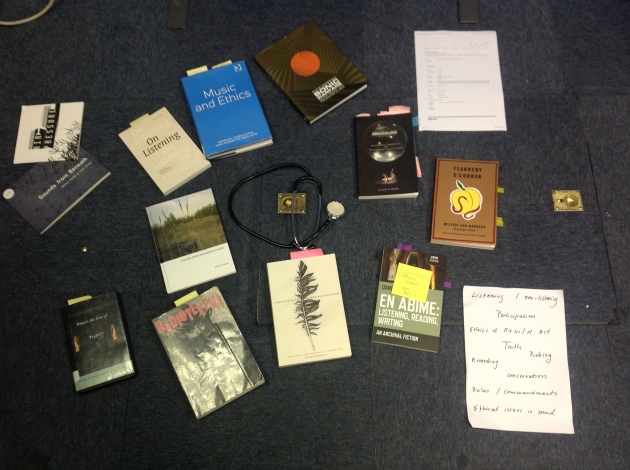
In the third episode of ora (Sept. 26, 2013), Cascella and Voegelin ask questions around listening, sound and ethics: between a radio broadcast from Buchenwald and the ambiguities of a tale of eavesdropping, on the slippery edge between recording and document, between assumptions of truth and practices of listening and non-listening. Special attention was paid to my co-authored book Music and Ethics (Ashgate 2012).
How can one represent a city on film using an inter-disciplinary approach based on sounds? Andrew Standen-Raz’s movie Vinyl deals with the topic how to “view” a city through its sounds, mediated sounds created by musicians as well as mediated and free sounds created by speech, transportation, random sounds, and other forms of communication. Vinyl explicitly explores the creative methods and cultural influences of musicians and how their own relationship to the city of Vienna affected their music and their sense of self. Many of them are part of the klingt.org community of sound artists, experimenting with anything and everything to communicate through sounds.
International course for composition and sound art
For the fourteenth time Musica organizes a composition course for young people and adults with a passion for composing and creating. During five days and in an inspiring environment, they challenge the boundaries of their own musical imagination. At the end of this week, the participants show their creations.
From this year on, the perspective is widened with a brand new course for sound art, in collaboration with ChampdAction. With the unique collection of artworks in Klankenbos as a source of inspiration, a selected group of young artists will work with sound, music and the environment.
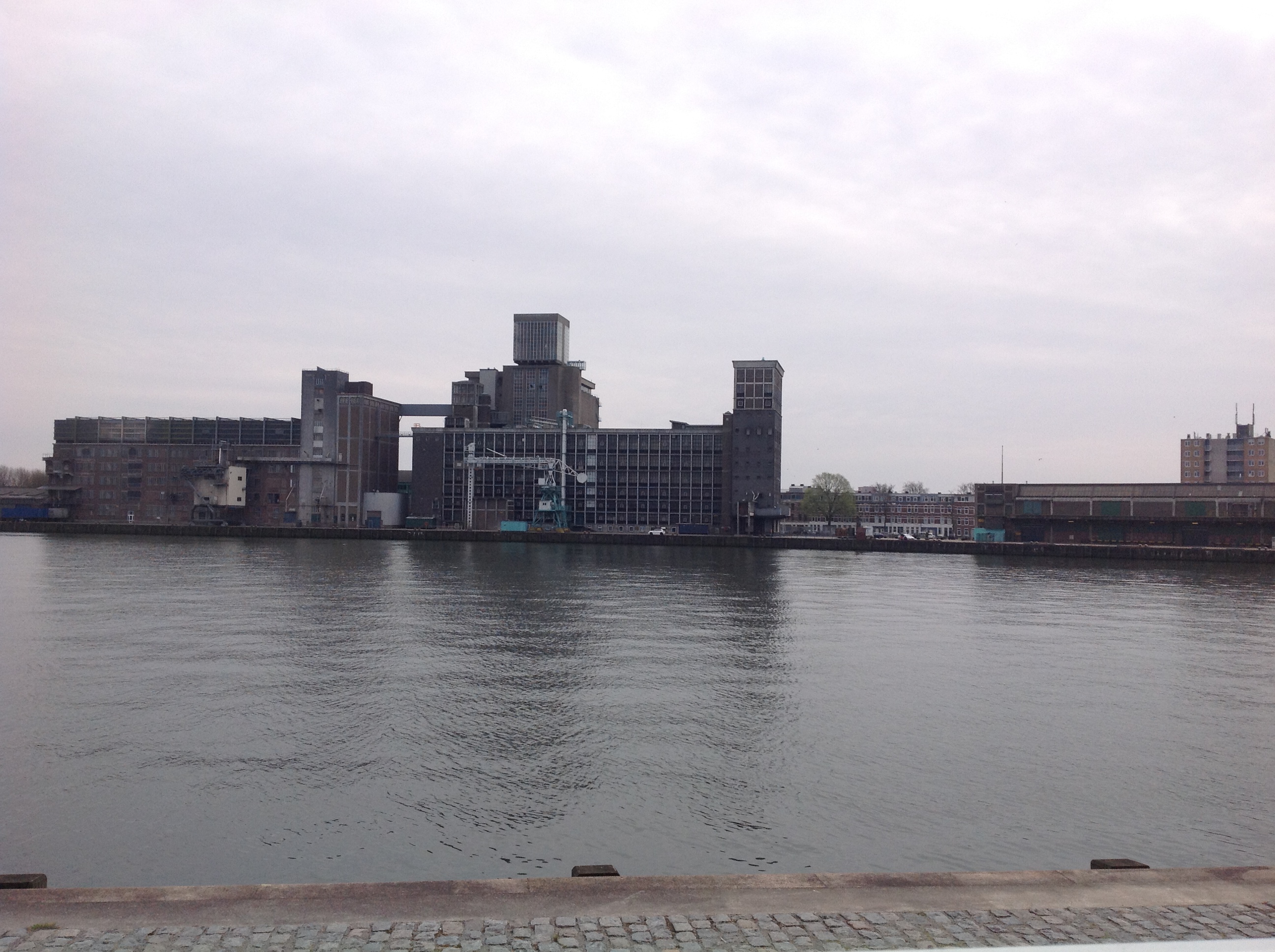
April 21, 2013, was the last day of a great festival on one of the most beautiful spots of Rotterdam, the Wilhelminapier.
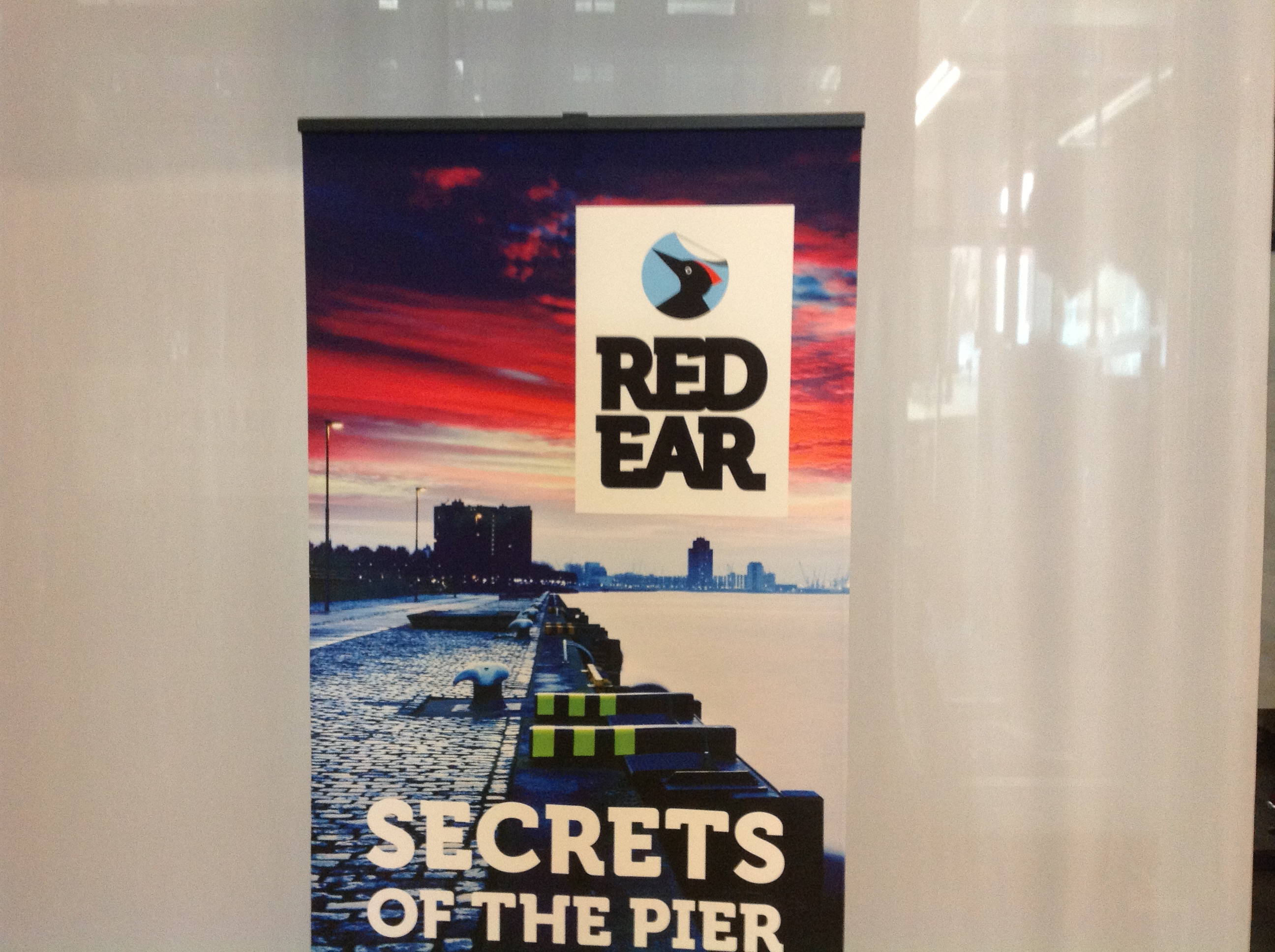
The festival – biannually organized and lasting three days – is called Red Ear. Festival with Daring Music .
It has a beautiful and challenging mix of jazz, modern classical music, sound art, improvised music, multi media installations, avant-garde music, electronic music, etc.
Here is a short impression of the last day of the festival, far from complete as there were over 16 performances scheduled, next to several sound installations and multi-media events.
12.00-13.00: Cloud of Identity Michel Banabila (sounds) and Geert Mul (images)
One of the most perfect combinations of visual and audio materials I have ever visited. The three big videoscreens and the impressive soundscapes gave comfortable as well as uncanny experiences of immersion. Cloud of Identity is based on the use of vowels and consonants in various linguistic systems.
13:00-14:00 Piano Concert in the Dark Untitled #275 Reinier van Houdt (piano) and Francisco Lopez (composition)
Listen to the repetitive, percussive, hammering sounds of the lowest parts of the piano. Prepared sounds, like in a Cage composition. Later on the mood changes and Van Houdt starts playing slow and soft chord progressions which reminded me of Morton Feldman.
In the second part of the piece, electronics take over and the piano remains silent. Are we listening to the same hammering sounds of the piano with which Lopez’composition opened? It seems like he has recorded and processed them, a bit like Alvin Lucier’s Nothing is Real, although without a teapot. As usual with Lopez’ pieces, it has to be experienced in the dark.
14:30-15:30 Bodurov Trio & Theodosii Spassov
Combining jazz with Balkan sounds and rhythms is not something new: Dusko Gojkovic, Bojan Zulfikarpasic, Ivo Papasov, and Slobodan Trkulja are but a few examples of succesfull musicians who have preceded the Bulgarian pianist Dimitar Bodurov, bass player Mihail Ivanov and drummer Jens Düppe. Nevertheless, the technical capacities of the musicians, the many tempo and mood changes in each tune, and the use of sound recordings, add something extra to this music in which East and West meet. Here the trio is complemented with kaval player Theodosii Spassov.
15:30-16:30 Stian Westerhus Solo
Electric guitar, computer, amplifiers, and an impressive amount of effect equipment – that’s the instrument with which Westerhus is interacting. The results consist of layers of sound, sometimes dreamy and tonal, at other moments rough, raw, and noisy.
16:30-18:00 The David Kweksilber Big Band
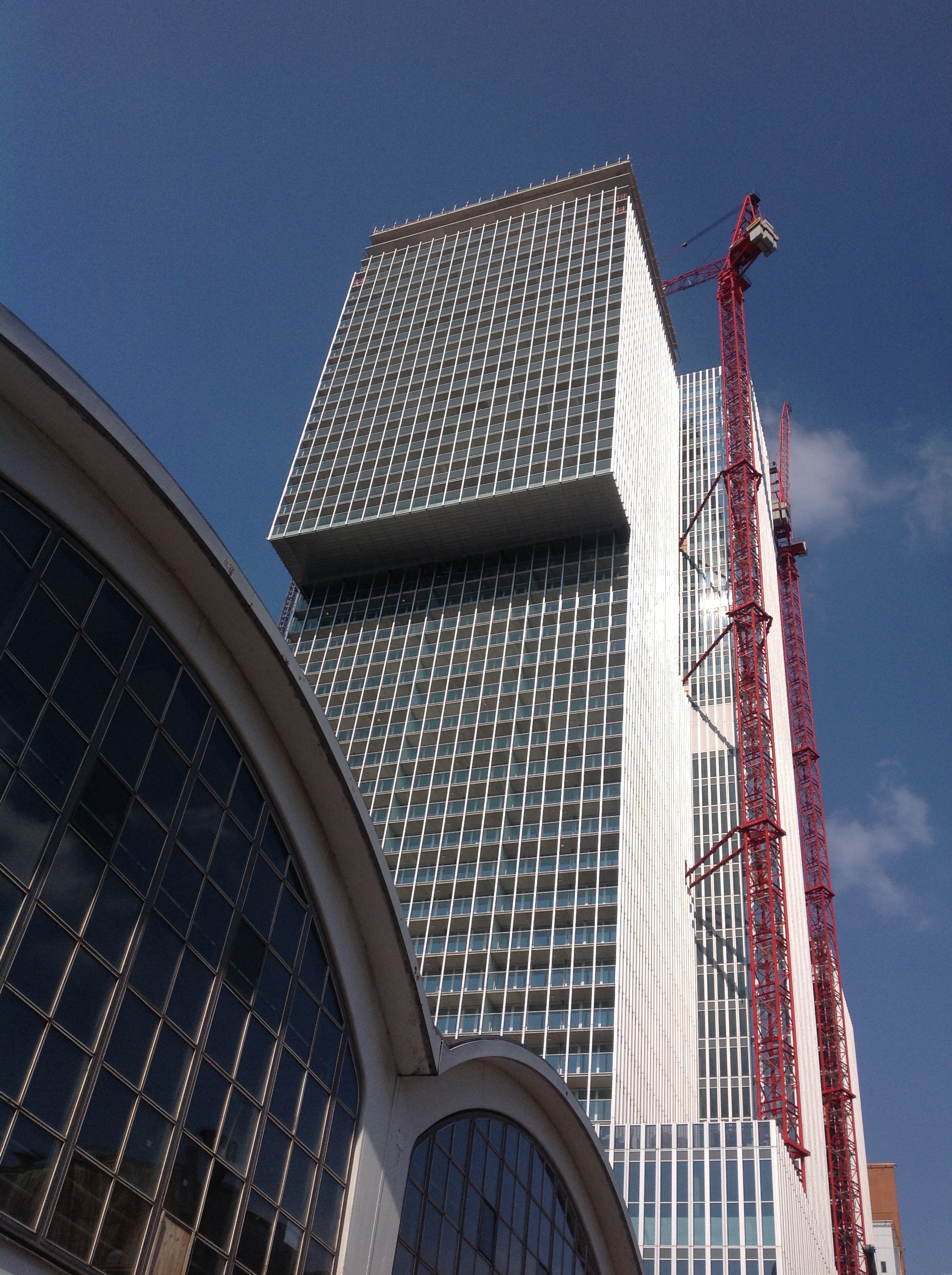
This is a piece by Ned McGowan, especially composed for this Big Band, for this Festival, and for the biggest building on the Wilhelminapier, Rem Koolhaas’ The Rotterdam.
The piece is loosely based on Ligeti’s Poeme Symphonique for 100 metronomes. Here, each big band member has its own meter. Perhaps this corresponds with the (a)synchronisity of the building itself.
On Monday March 3 I give a presentation in Helsinki on sonic epistemology: what would a sonic paradigm sound like? In other words, how can we continue the works of Jean-Luc Nancy on the resonating subject, Christoph Cox on sonic materialism and Salome Voegelin on the contingencies of listening?
On December 7, 2012 I’m organizing a small, 1-day conference on auditory culture in The Netherlands. 20-25 people dealing with sound will gather in a venue in Leiden to discuss sound: philosophers, sound artists, biologists, architects, audiologists, sound designers, psychologists, people from governmental organizations dealing with noise abatement, etc. Aim is to exchange thoughts, to transgress discourses, and to develop a common research strategy.
Yeah! It’s there, my (co-author Nanette Nielsen from Nottingham U) new book on music and ethics. With the final answers on how music ‘as music’ might contribute to the (philosophical) discourses on ethics and to concrete moral behavior. Keywords: listening, interaction, and engagement. From Alban Berg to Jacques Derrida, from Bob Dylan to Alain Badiou, from Sachiko M to Gilles Deleuze, from the chants of football fans to Zygmunt Bauman, and from Richard Taruskin to sonic weapons …




 Thinking Sounds